

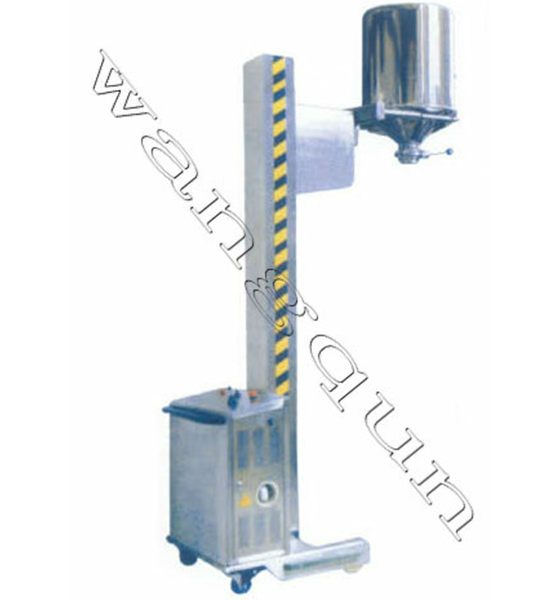
Troubleshooting Uneven Compression in Large tonnage tablet presses: A Technical Guide
Industry Background and Market Demand
The pharmaceutical and nutraceutical industries rely heavily on large tonnage tablet presses to produce high-volume batches of tablets with consistent quality. These machines, capable of exerting forces exceeding 100 kN, are essential for manufacturing compressed tablets with precise weight, hardness, and dissolution properties.
However, uneven compression remains a persistent challenge, leading to variations in tablet hardness, weight, and structural integrity. Given the stringent regulatory requirements (e.g., FDA, EMA) and the need for cost-efficient production, troubleshooting compression inconsistencies is critical for minimizing waste and ensuring compliance.
Core Concepts: Understanding Uneven Compression
Uneven compression occurs when the applied force is not uniformly distributed across the tablet, resulting in density variations. Key factors influencing this issue include:
- Die Fill Uniformity – Inconsistent powder flow into the die cavity leads to uneven weight distribution.
- Punch Alignment and Wear – Misaligned or worn punches cause asymmetrical force application.
- Powder Characteristics – Variations in particle size, moisture content, or flowability affect compressibility.
- Press Mechanics – Machine rigidity, turret speed, and pre-compression settings impact force distribution.
Product Structure and Performance Considerations
Modern large tonnage tablet presses incorporate advanced features to mitigate compression inconsistencies:
1. Machine Design and Rigidity
High-precision tablet presses use reinforced frames and turrets to minimize deflection under high loads. Hydraulic or servo-electric systems ensure consistent force application.
2. Tooling Specifications
- Punch and Die Materials – High-grade steel (e.g., D2, DC53) with carbide coatings enhances durability and reduces wear.
- Tooling Tolerances – Tight tolerances (≤ 5 µm) prevent misalignment and ensure uniform compression.
3. Control Systems
Closed-loop feedback mechanisms monitor compression force in real-time, adjusting parameters to maintain uniformity.
Key Factors Affecting Compression Quality
1. Powder Formulation and Preparation
- Particle Size Distribution (PSD) – Narrow PSD improves flow and compressibility.
- Lubrication – Excessive lubricant (e.g., magnesium stearate) can reduce tablet hardness.
- Moisture Content – Hygroscopic powders may compact unevenly if not properly conditioned.
2. Press Settings and Maintenance
- Pre-Compression Force – Insufficient pre-compression leads to air entrapment and density variations.
- Turret Speed – High speeds may cause inadequate die fill or inconsistent compression dwell time.
- Tooling Inspection – Regular checks for punch tip wear or die bore scoring prevent defects.
Supplier Selection and Quality Assurance
When sourcing large tonnage tablet presses or tooling, consider:
- Manufacturer Reputation – Established suppliers (e.g., Fette, Korsch, Manesty) provide validated machines with compliance documentation.
- Material Certifications – Tooling should meet ISO 9001 and ASTM standards for material integrity.
- After-Sales Support – Availability of technical service and spare parts reduces downtime.
Common Industry Pain Points
1. Tooling Wear and Tear – Frequent replacement increases operational costs.
2. Regulatory Scrutiny – Non-uniform tablets risk batch rejection in GMP environments.
3. Process Variability – Inconsistent raw materials or press settings lead to rework.
Application Scenarios and Case Studies
Pharmaceutical Tableting
A major generics manufacturer faced capping issues due to uneven compression. Root cause analysis revealed punch misalignment and suboptimal pre-compression force. After recalibrating the press and replacing worn tooling, tablet hardness CV% improved from 8% to 3%.
Nutraceutical Production
A contract manufacturer struggled with weight variations in high-speed runs. Adjusting the feeder system and optimizing powder granulation reduced weight RSD from 5% to 1.5%.
Current Trends and Future Developments
1. AI-Driven Predictive Maintenance – Machine learning models analyze press data to predict tooling wear and compression faults.
2. Hybrid Press Designs – Combining rotary and eccentric mechanisms enhances force uniformity.
3. Sustainable Tooling – Advanced coatings (e.g., diamond-like carbon) extend tool life and reduce material waste.
FAQ: Troubleshooting Uneven Compression
Q: How can I detect uneven compression early?
A: Monitor tablet hardness and weight RSD in real-time using in-line sensors.
Q: What is the role of dwell time in compression uniformity?
A: Longer dwell time allows for more complete particle rearrangement, reducing density gradients.
Q: Can tooling design affect compression consistency?
A: Yes, flat-faced punches with minimal taper reduce stress concentration, improving uniformity.
Conclusion
Addressing uneven compression in large tonnage tablet presses requires a systematic approach, from powder formulation to machine maintenance. By leveraging advanced press technology, rigorous quality control, and supplier expertise, manufacturers can achieve consistent tablet quality while optimizing production efficiency. Future innovations in predictive analytics and tooling materials will further enhance process reliability.
Copyright © 2025 Changzhou Wangqun Pharmaceutical Machinery Co., Ltd. All Rights Reserved.
SitemapThis website uses cookies to ensure you get the best experience on our website.
 Español
 Pусский
 Français
 العربية



 Phone
Phone
Comment
(0)